
Last Updated on AUG 22, 2026
As of the 2026/27 tax year, most people in the UK can earn up to £12,570 before paying Income Tax, provided they qualify for the full standard Personal Allowance.
The allowance remains unchanged from 2025/26, although different rules can apply to people earning more than £100,000 and Scottish taxpayers have separate bands for employment, pension, property and self-employment income.
This article explains the current 2026/27 Income Tax thresholds, National Insurance rates, additional allowances and other tax-free income, as well as important changes affecting dividends, Child Benefit and Self Assessment.
What Is the UK Personal Allowance for 2026/27?

The Personal Allowance is the amount of income an individual can usually receive before paying Income Tax. For the 2026/27 tax year, the standard Personal Allowance remains £12,570 across the UK. It is gradually withdrawn when adjusted net income exceeds £100,000 and is completely lost once adjusted net income reaches £125,140.
This means individuals earning £12,570 or less do not pay any income tax. The Personal Allowance is applied automatically, usually via PAYE for employees or through the tax calculation in Self Assessment for those who are self-employed.
However, individuals with adjusted net income over £100,000 begin to lose their Personal Allowance. For every £2 earned over £100,000, the allowance is reduced by £1. If income reaches £125,140 or more, the entire allowance is removed, and the individual pays tax on all earnings.
How Do UK Income Tax Bands Work in the 2026/27 Tax Year?
After the Personal Allowance is deducted from your income, the remaining amount is taxed according to a series of progressive bands. These income tax bands determine how much tax is paid depending on how much income falls within each band.
The following table outlines the current income tax bands and rates for the 2026/27 tax year for individuals with the standard Personal Allowance:
| Income Tax Band | Taxable Income Range | Tax Rate |
| Personal Allowance | Up to £12,570 | 0% |
| Basic Rate | £12,571 to £50,270 | 20% |
| Higher Rate | £50,271 to £125,140 | 40% |
| Additional Rate | Over £125,140 | 45% |
The income falling within each band is taxed at the corresponding rate. These rates apply to England, Wales and Northern Ireland. Individuals residing in Scotland are subject to different tax rates and bands.
The freezing of income tax thresholds, including the Personal Allowance and tax bands, is part of the government’s fiscal policy, aimed at reducing public borrowing while gradually increasing tax receipts through fiscal drag.
What Happens If You Earn Over £100,000?
Earning above £100,000 places individuals in a specific tax scenario where their Personal Allowance is tapered, increasing the effective marginal tax rate.
For each £2 over £100,000 earned, £1 of the Personal Allowance is withdrawn. This continues until the entire Personal Allowance is removed at an income level of £125,140.
This withdrawal results in an effective tax rate of 60% on income between £100,000 and £125,140, due to:
- The removal of the tax-free allowance
- Tax being paid at the higher rate (40%) on that portion
Taxpayers in this bracket often consider pension contributions or charitable donations to bring their income below the threshold and preserve their allowance.
Are There Any Additional Tax-Free Allowances?
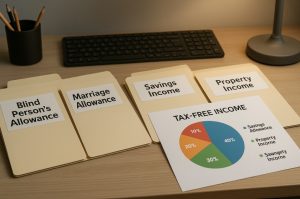
In addition to the standard Personal Allowance, individuals in the UK may be eligible for several additional tax-free allowances depending on their circumstances.
Blind Person’s Allowance
- An additional £3,250 is available for eligible people in 2026/27
- It is added to the standard Personal Allowance
- The equivalent allowance was £3,130 in 2025/26
Marriage Allowance
- An eligible spouse or civil partner can transfer £1,260 of their Personal Allowance
- This can reduce their partner’s Income Tax bill by up to £252
- These amounts remain unchanged for 2026/27
Personal Savings Allowance
- Basic-rate taxpayers can normally receive up to £1,000 of savings interest without paying tax
- Higher-rate taxpayers can receive up to £500
- Additional-rate taxpayers do not receive a Personal Savings Allowance
Dividend Allowance
The Dividend Allowance remains £500 for 2026/27. However, the tax rates applying to dividends above available allowances changed from 6 April 2026. They are now 10.75% for basic-rate taxpayers, 35.75% for higher-rate taxpayers and 39.35% for additional-rate taxpayers.
How Is Income Tax Calculated in the UK?
Income tax is calculated by subtracting all applicable allowances from total income and then applying the appropriate tax rates to each portion of income within the tax bands.
The method of collection differs depending on employment status:
- Employees: Tax is deducted through the PAYE system, where employers automatically withhold income tax and National Insurance contributions.
- Self-employed: Must register for Self Assessment and file a tax return each year.
Example Calculation
An individual earning £35,000 annually, with the standard Personal Allowance, would calculate their tax liability as follows:
| Description | Amount |
| Total Income | £35,000 |
| Personal Allowance | £12,570 |
| Taxable Income | £22,430 |
| Tax at 20% (Basic Rate) | £4,486 |
In this example, the total income tax paid would be £4,486.
Additional deductions such as pension contributions, charitable donations, or student loan repayments can further reduce the tax owed. These deductions are factored into either the PAYE system or the Self Assessment return depending on the individual’s employment type [6].
How Much Can You Earn Before Paying National Insurance?
National Insurance is separate from Income Tax. For the 2026/27 tax year, standard employees start paying employee Class 1 National Insurance when earnings exceed the Primary Threshold of £242 per week, £1,048 per month or £12,570 per year.
National Insurance Thresholds and Rates for 2026/27
| NIC Type | Earnings or Profit | Rate |
|---|---|---|
| Class 1 Employees | £12,570 to £50,270 | 8% |
| Class 1 Employees | Above £50,270 | 2% |
| Class 4 Self-Employed | £12,570 to £50,270 | 6% |
| Class 4 Self-Employed | Above £50,270 | 2% |
For self-employed people, Class 2 National Insurance is generally treated as paid rather than charged when annual profits are £7,105 or more, helping protect entitlement to contributory benefits.
Those with profits below £7,105 can choose to pay voluntary Class 2 contributions, which cost £3.65 per week in 2026/27.
For most employees using the standard Category A rate, Class 1 contributions are charged at 8% between the Primary Threshold and Upper Earnings Limit and 2% above that level.
What Income Is Considered Tax-Free in the UK?
The UK tax system includes several categories of non-taxable income that do not count towards your Personal Allowance and are not included in income tax calculations.
These include:
- Individual Savings Accounts (ISAs): Income from cash or stocks and shares ISAs is tax-free
- Premium Bond winnings
- National Lottery and gambling winnings
- Scholarships and certain educational grants
- Certain welfare benefits, such as Disability Living Allowance and Attendance Allowance
- Child Benefit: Child Benefit itself is tax-free, but the High Income Child Benefit Charge can apply when the higher earner’s adjusted net income exceeds £60,000.
- The charge increases gradually between £60,000 and £80,000, with the equivalent of the full Child Benefit payment charged once adjusted net income reaches £80,000 or more.
Understanding which forms of income are exempt from tax can help ensure you stay within tax-free thresholds and avoid unnecessary taxation.
Can You Reduce Your Income Tax Bill Legally?
There are a variety of legal strategies that UK taxpayers can use to reduce their income tax liability.
These methods must be implemented in accordance with HMRC guidance to avoid penalties or fines.
Some commonly used strategies include:
- Pension Contributions: Contributing to a workplace pension or private pension reduces taxable income.
- Gift Aid Donations: Donations to registered charities under Gift Aid increase the value of the gift and provide tax relief for the donor.
- Marriage Allowance Transfer: Utilising unused Personal Allowance between partners can reduce overall household tax bills.
- Claiming Tax Reliefs: HMRC offers tax reliefs for professional fees, subscriptions, tools, uniforms, and certain travel expenses.
Those working from home or incurring work-related costs may also be eligible for additional reliefs. All claims must be supported by records and documentation.
It is advisable to maintain receipts and utilise HMRC’s online tools to manage and file claims accurately.
How Income Tax Applies to a UK Employee in 2026/27 With Real-Life Example?
To better understand how much you can earn before paying tax in the UK, let’s look at a practical example of a full-time employee based in England during the 2025/26 tax year.
Scenario:
Emma is employed full-time and earns a gross annual salary of £42,000. She receives no other sources of income and is not eligible for additional allowances such as Marriage Allowance or Blind Person’s Allowance.
Step-by-step tax calculation:
- Total Annual Income: £42,000 (gross salary)
- Less: Personal Allowance: £12,570 (standard allowance for 2025/26)
- Taxable Income: £42,000 – £12,570 = £29,430
- Apply Tax Bands
- The entire £29,430 falls into the Basic Rate band (£12,571 to £50,270)
- Basic rate tax at 20% = £5,886
So, Emma pays £5,886 in income tax for the year.
Additional Deductions
Emma would also pay National Insurance contributions, calculated separately based on thresholds and NIC classes, as discussed earlier in the blog.
Key Takeaways From this Example
- Despite earning £42,000, only the income above £12,570 is taxed.
- Since her income doesn’t exceed £50,270, she remains in the Basic Rate
- If she had made pension contributions or donated to charity under Gift Aid, her taxable income could have been reduced, resulting in lower tax.
This example demonstrates how the Personal Allowance and income tax bands apply in real life and how proper financial planning can help reduce tax liabilities within legal limits.
How Have Tax Rates Changed Over the Years?
Over the past few years, the UK Government has implemented a policy of freezing income tax thresholds, including the Personal Allowance and income tax bands.
The Personal Allowance and main higher-rate threshold have remained frozen for several years, and the government has now extended the freeze further.
The Personal Allowance is set to remain at £12,570 and the higher-rate threshold at £50,270 until 5 April 2031 for taxpayers in England, Wales and Northern Ireland, while Scotland continues to set its own non-savings and non-dividend Income Tax bands.
What Does This Mean in Practice?
Although tax rates themselves (such as 20%, 40%, and 45%) have not increased, freezing the thresholds effectively increases the amount of tax that many people pay over time. This is due to a concept known as fiscal drag.
Fiscal drag occurs when inflation leads to higher wages or earnings, but tax-free thresholds do not rise accordingly. As a result:
- More people start paying tax for the first time as their income exceeds the Personal Allowance
- Existing taxpayers find a larger portion of their income taxed at higher rates
- Some individuals are pushed into higher tax bands, such as the higher rate (40%) or additional rate (45%), even though their increased earnings may only match inflation
In effect, taxpayers may feel worse off in real terms, as more of their income becomes taxable, even though headline tax rates remain unchanged.
Comparison of Tax Thresholds 2025/26 vs 2026/27
The table below shows that no changes have been made to the main thresholds between the two consecutive tax years:
| Tax Year | Personal Allowance | Basic Rate Band | Higher Rate Starts |
|---|---|---|---|
| 2025/26 | £12,570 | £12,571 – £50,270 | £50,271 |
| 2026/27 | £12,570 | £12,571 – £50,270 | £50,271 |
Because these thresholds remain unchanged, individuals receiving modest annual pay increases often just to keep pace with inflation may still end up paying more tax year on year.
The Long-Term Impact
The Office for Budget Responsibility (OBR) has warned that the freeze in tax thresholds will bring millions more people into higher tax brackets by the time the freeze is lifted in 2028. This silent expansion of the tax base is a form of stealth taxation, as it increases revenue for the government without overtly raising tax rates.
In practical terms:
- A person earning £49,000 in 2023 may have paid tax mostly at the basic rate
- By 2026, a similar income adjusted for inflation could push them into the higher rate bracket, increasing their tax bill even if their purchasing power hasn’t improved
This strategy, while politically more palatable than increasing tax rates, still places a heavier burden on working and middle-income earners, particularly as the cost of living continues to rise.
The ongoing freeze, combined with rising wage inflation, is likely to remain a key factor affecting household take-home pay across the UK in the coming years .
Who Needs to File a Self-Assessment Tax Return?
Not all taxpayers need to submit a Self Assessment Tax Return, but it is mandatory under certain conditions.
You generally need to check whether a Self Assessment return is required if:
- You were self-employed as a sole trader and had more than £1,000 of gross trading income
- You were a partner in a business partnership
- You had a Capital Gains Tax liability
- You need to pay the High Income Child Benefit Charge and are not paying it through PAYE
- You are an off-payroll worker who needs to repay a student or postgraduate loan
- You receive untaxed income, which can include rental income, tips, commission, savings interest, dividends or foreign income
- Having PAYE income above £100,000 does not by itself appear on HMRC’s current list as an automatic requirement to file, and being a company director alone is also not an automatic Self Assessment requirement.
- Taxpayers with untaxed or more complicated income should use HMRC’s current checker to establish whether a return is needed.
- HMRC now allows eligible taxpayers to pay the High Income Child Benefit Charge through PAYE instead of completing Self Assessment solely for that charge.
The deadline for online Self Assessment returns is 31 January following the end of the tax year. Missing the deadline results in an automatic £100 fine, with additional penalties for longer delays. Accurate reporting is essential to avoid compliance issues and penalties.
How Do Scottish Income Tax Rates Differ?
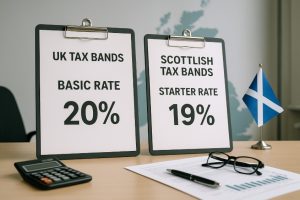
Scottish taxpayers pay different rates and bands on non-savings and non-dividend income, including most employment income, self-employment profits, pensions and property income.
For the 2026/27 tax year, assuming the taxpayer receives the standard £12,570 Personal Allowance, the Scottish bands are:
| Scottish Income Tax Band | Income Range | Rate |
|---|---|---|
| Starter Rate | £12,571 to £16,537 | 19% |
| Basic Rate | £16,538 to £29,526 | 20% |
| Intermediate Rate | £29,527 to £43,662 | 21% |
| Higher Rate | £43,663 to £75,000 | 42% |
| Advanced Rate | £75,001 to £125,140 | 45% |
| Top Rate | Over £125,140 | 48% |
The Scottish Government increased the Starter and Basic Rate band thresholds for 2026/27, while the Higher, Advanced and Top Rate thresholds remain particularly important for higher earners.
Conclusion
For the 2026/27 tax year, the standard UK Personal Allowance remains £12,570, meaning most people do not start paying Income Tax until their taxable income exceeds this amount.
The main Income Tax thresholds for England, Wales and Northern Ireland are unchanged, but National Insurance rules, Scottish tax bands and dividend rates need to be considered separately.
Taxpayers should also be aware that the main Personal Allowance and higher-rate threshold freeze is now due to continue until 5 April 2031, while the High Income Child Benefit Charge starts above £60,000 rather than the £50,000 figure previously used.
Checking current HMRC rules is particularly important for people who are self-employed, receive dividends or rental income, or have multiple sources of income.
Frequently Asked Questions
What is adjusted net income in tax calculations?
Adjusted net income is your total taxable income minus specific tax reliefs like pension contributions and Gift Aid donations. It’s used to determine reductions to your Personal Allowance.
Do students have to pay income tax in the UK?
Yes, students must pay income tax if they earn above the Personal Allowance. However, most part-time student jobs do not exceed the threshold.
Is Universal Credit taxable income?
No, Universal Credit is not subject to income tax. However, other benefits like the State Pension may be taxable.
How do pension contributions affect income tax?
Pension contributions reduce your taxable income, lowering the amount of income tax you owe. Higher-rate taxpayers receive greater relief on contributions.
What happens if I don’t pay tax owed?
Failure to pay income tax can result in penalties, interest charges, and possible legal action from HMRC.
Can I claim expenses against my income?
Yes, if you’re self-employed or incur work-related costs, you may be able to deduct allowable expenses to reduce taxable income.
How do I check how much tax I’ve paid?
You can log in to your HMRC personal tax account to view your tax records, check how much tax you’ve paid, and make corrections if needed.

Leave a Reply