
Last Updated on AUG 21, 2026
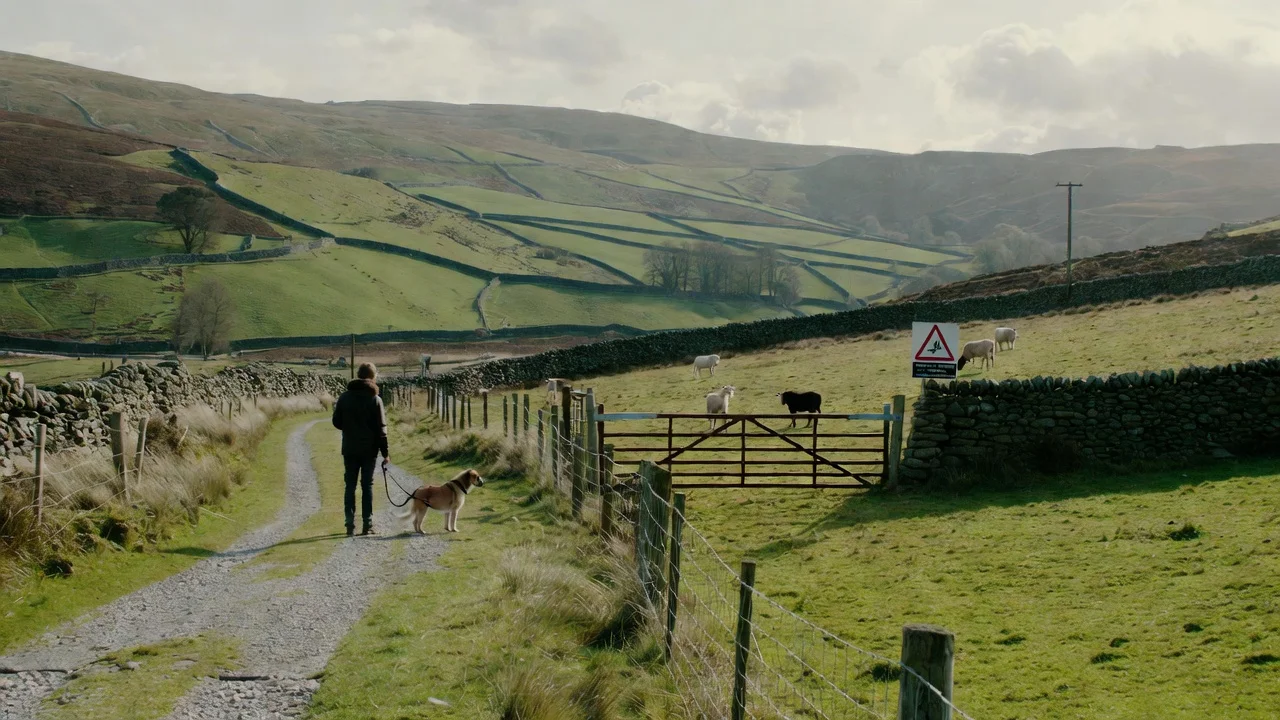
As of 18 March 2026, dog owners and people in charge of dogs in Wales face tougher consequences if a dog attacks or worries livestock. The Dogs (Protection of Livestock) (Amendment) Act 2025 has now come into force across England and Wales, increasing the previous maximum £1,000 fine to an unlimited fine and giving police stronger investigation, seizure and evidence-gathering powers.
The Act received Royal Assent on 18 December 2025 before taking effect three months later on 18 March 2026.
Key changes now in force include:
- Unlimited Fines Instead Of The Previous £1,000 Maximum
- Incidents On Roads And Paths Brought Within The Offence
- Camelids Such As Alpacas And Llamas Added To Protected Livestock
- Stronger Police Powers To Seize And Detain Suspected Dogs
- Forensic Samples And Impressions Can Be Collected
- Warrants Can Be Obtained To Enter And Search Premises
- Courts Can Order Offenders To Pay Reasonable Dog Seizure And Detention Expenses
- A Defence Is Available In Certain Cases Where Someone Had The Dog Without The Owner’s Consent
Physical injury is not necessary in every case. Chasing livestock in circumstances likely to cause injury or suffering can constitute worrying, while a dog being at large in a field or enclosure containing sheep can also fall within the offence.
Separate local Public Spaces Protection Orders, rather than the 2025 Act itself, may impose additional dog-control requirements in particular public places.
Why Are Dog Walking Fines Increasing in Wales?
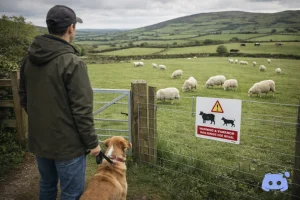
The Dogs (Protection of Livestock) (Amendment) Act 2025 received Royal Assent on 18 December 2025 and came into force on 18 March 2026. Its introduction followed longstanding calls from farming organisations and rural policing teams for stronger powers to investigate livestock attacks and more meaningful penalties for offenders.
The need for stronger protection remains significant. Figures published in 2026 by NFU Mutual and reported by NFU Cymru estimated that £385,000 worth of farm animals in Wales were severely injured or killed in dog attacks during 2025.
That represented a 23% increase compared with 2024. Across the UK, the estimated cost reached £1.95 million, up 10% year on year.
| Latest Livestock Attack Data | 2025 Figure |
|---|---|
| Estimated Cost In Wales | £385,000 |
| Change From 2024 | +23% |
| Estimated UK Cost | £1.95 Million |
| UK Annual Increase | +10% |
A survey of 1,407 dog owners published alongside the figures found that 57% allowed their dogs off lead in the countryside, while one in 10 said their dog had no recall and one in 20 admitted their dog had chased livestock.
What Does the New Dog Law in Wales Actually Say?
The 2025 Act modernises the Dogs (Protection of Livestock) Act 1953 rather than creating an entirely separate livestock-worrying regime. The principal changes are wider geographical coverage, stronger investigation powers, higher penalties and the addition of camelids to the livestock definition.
Here’s a breakdown of what’s new:
| Legal Area | Previous Position | Position From 18 March 2026 |
|---|---|---|
| Maximum Fine | Up To £1,000 | Unlimited Fine |
| Roads And Paths | More Limited Coverage | Expressly Included |
| Camelids | Not Included | Alpacas, Llamas And Other Camelids Included |
| Police Seizure Powers | More Limited | Expanded For Suspected And Continuing Risks |
| Forensic Evidence | Limited Specific Powers | Samples And Impressions Can Be Taken |
| Entry To Premises | More Limited | Warrant Powers Strengthened |
| Owner Defence | Existing Limited Defence | Also Covers Certain Cases Where Another Person Had The Dog Without Consent |
| Detention Costs | No Equivalent New Court Power | Court Can Order Reasonable Seizure And Detention Expenses |
Clarified Legal Definitions
One of the most important changes is the legal clarification between two actions:
- Worrying livestock: Includes chasing, being loose among animals, or disturbing them to the point of causing stress or injury.
- Attacking livestock: Physical contact or biting, leading to injury or death.
This separation allows law enforcement and courts to better assess the severity of an incident and apply more appropriate penalties.
Extension to More Livestock
A growing number of farms in Wales now keep camelids, such as alpacas and llamas, often for tourism or wool production. These animals, along with ostriches and emus, are now protected under the new law.
Police can now investigate and prosecute incidents where dogs interact dangerously with this broader range of livestock.
How Could You Be Fined Under the New Dog Walking Rules?
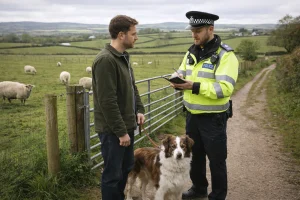
Penalties for violating the updated law are severe and allow for broader interpretation by police and magistrates. Dog walkers in Wales can now face unlimited fines, especially if they are found to have neglected control responsibilities.
Previously, the law capped fines at £1,000, which many in the farming community considered insufficient. With this change, the courts now have the flexibility to impose harsher financial consequences based on the seriousness of the offence.
Here is a comparison of penalties before and after the new law:
| Scenario | 1953 Law Penalty | 2025 Law Penalty |
|---|---|---|
| Dog chases sheep but causes no injury | Warning or small fine | Possible court case and unlimited fine |
| Dog injures or kills livestock | Max £1,000 fine | Unlimited fine and potential prosecution |
| Repeat offences | Possible court referral | Seizure of dog and formal investigation |
The most important financial change is that the previous £1,000 maximum fine has been removed. A person convicted of the livestock offence can now receive an unlimited fine, allowing magistrates to reflect the seriousness of individual cases.
Police can also seize and detain a dog when they have reasonable grounds to believe it has attacked or worried livestock and there is a risk of it doing so again.
A dog may remain detained while an investigation is carried out or, if proceedings begin, until those proceedings are determined or withdrawn.
The Act also gives courts a specific power to require a convicted offender to pay reasonable expenses resulting from the seizure and detention of the dog.
This should not be described as a new police power to demand compensation for veterinary bills or livestock losses because that is not what this particular provision of the 2025 amendment says.
Police investigating an incident can additionally collect samples or impressions from dogs and livestock where these could provide evidence. These measures can help establish whether a particular dog was involved in an incident.
Where Do These Rules Apply Across Wales?
A common misunderstanding is that the law only applies to incidents happening within a fenced farm or private land. In reality, the new legislation broadens the scope to include various public access areas where livestock might graze or roam.
Here’s where the law applies:
| Area | 1953 Act | 2025 Amendment |
|---|---|---|
| Enclosed farmland | Yes | Yes |
| Public footpaths through farmland | No | Yes |
| Roads adjacent to grazing land | No | Yes |
| Access land under CRoW Act | No | Yes |
| Commons or hill grazing areas | No | Yes |
The amendment extends the livestock offence beyond agricultural land by expressly covering incidents occurring on roads and paths. This matters in Wales because livestock are frequently moved along rural roads and public paths often cross or border working farmland.
There is an important exception. Where livestock have simply strayed onto a road or path from the place where they are normally kept, a person does not automatically commit the livestock offence because of something their dog does there, unless that person causes the dog to attack the livestock.
Dog walkers should also distinguish the livestock legislation from separate countryside access rules. Natural Resources Wales currently advises that dogs must remain under effective control and states that dogs must be on a lead around livestock on open-access land. Between 1 March and 31 July, dogs must also be on a lead on open-access land even when livestock are not present.
Local PSPOs can impose additional restrictions in specified public places, including lead requirements, dog-exclusion areas and limits on the number of dogs one person may walk.
Breaching a PSPO can result in a £100 fixed penalty or a fine of up to £1,000 following prosecution. Those penalties are separate from the unlimited fine available for the livestock offence.
Can You Still Walk Multiple Dogs or Let Them Off the Lead?
The Dogs (Protection of Livestock) legislation does not introduce a nationwide or Wales-wide limit on how many dogs one person may walk. However, individual councils can use Public Spaces Protection Orders to impose dog-number limits in designated areas, including limits affecting professional dog walkers.
There is also no universal rule stating that every countryside dog must remain on a lead at all times. The key legal issue is whether the dog is properly controlled and whether livestock or other local restrictions are present.
| Situation | What Dog Walkers Should Do |
|---|---|
| Walking Near Livestock | Keep The Dog On A Lead |
| Open-Access Land Near Livestock | Lead Required |
| Open-Access Land From 1 March To 31 July | Lead Required |
| Public Path Without Livestock | Dog May Be Off Lead If Effectively Controlled, Subject To Local Rules |
| Area Covered By A PSPO | Follow The Specific Local Restrictions |
| Dog Cannot Reliably Recall | Keep It On A Lead |
| Cattle Threaten The Walker | Release The Dog If Necessary For Personal Safety |
What Should Dog Owners Do to Stay Compliant?
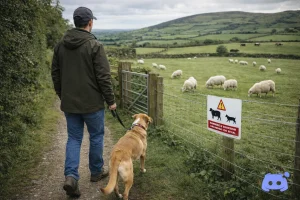
Staying on the right side of the law doesn’t require drastic lifestyle changes but rather a more mindful and proactive approach to countryside dog walking.
Here are some core best practices that every dog walker in Wales should consider:
- Always carry a lead, even if your dog is typically well-behaved
- Keep dogs on a lead near livestock or signs of grazing
- Respect local signage and PSPO notices
- Avoid walking through fields with visible livestock, even on public rights of way if alternative routes are available
- Practice and reinforce recall training so your dog returns immediately on command
Training and routine can make a big difference. Some organisations, including the Kennel Club and RSPCA, offer free or low-cost courses for dog owners to reinforce control in open spaces.
From my experience, shifting my walking habits slightly, using quieter paths, earlier hours, and keeping to the field edge has helped reduce any chance of livestock interaction. It’s not an inconvenience but rather a part of responsible pet ownership.
What Happens If Your Dog Worries Livestock?
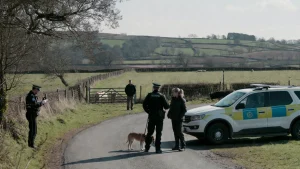
If your dog is found to have worried or attacked livestock, the process now involves faster and more extensive investigative procedures.
Under the new powers, police can:
- Enter private property to seize and detain a dog suspected of worrying livestock
- Take forensic samples or impressions from the dog (pawprints, saliva) or livestock
- Identify and interview witnesses, including farmers and other walkers
- Order the dog to be held until a court hearing
The table below outlines the potential steps:
| Investigation Step | Triggered When |
|---|---|
| Seizure of dog | Risk of repeated offence or court proceedings pending |
| Evidence collection (samples/impressions) | Dog suspected of contact with livestock |
| Court summons issued | Dog owner refuses fine or offence is severe |
| Compensation assessment | Livestock injury or loss documented |
A dog does not need to have made physical contact with livestock to be subject to these processes. The sight of a dog running near ewes in lambing season, for instance, is enough for a report to be made and an investigation to begin.
Conclusion
Dog walking has not been banned or fundamentally restricted across Wales, but the consequences of failing to control a dog around livestock are now considerably more serious.
Since 18 March 2026, the Dogs (Protection of Livestock) (Amendment) Act 2025 has allowed courts to impose unlimited fines, expanded the offence to roads and paths, added camelids such as alpacas and llamas to protected livestock and strengthened police powers to seize dogs and gather forensic evidence.
The changes are particularly relevant following the latest figures showing an estimated £385,000 of livestock in Wales was severely injured or killed by dogs during 2025, 23% more than in 2024.
For most responsible owners, compliance is straightforward: keep a lead available, use it around livestock, maintain reliable control, obey countryside signage and check whether local PSPO or open-access restrictions apply.
The key distinction is that the unlimited fine relates to livestock attacking or worrying offences, while ordinary dog-control breaches under local PSPOs carry their own separate penalties.
FAQs
Can I be fined if my dog chases livestock but doesn’t hurt them?
Yes. Under the new law, worrying livestock includes chasing or causing stress, not just physical harm.
Are all breeds affected by this new rule in Wales?
Yes, all dog breeds fall under this law, regardless of size or temperament.
What is the legal definition of “worrying livestock”?
Worrying includes chasing, attacking, or being loose among livestock in a way that could cause harm or distress.
Do I need to report if someone else’s dog worries livestock?
Yes, you can report incidents to the local police or rural crime unit. Anonymous tips are also accepted.
What happens if my dog was stolen and then worried livestock?
The new act provides a defence if the dog was under someone else’s control without your consent, such as in the case of theft.
Are alpacas and llamas covered by the new legislation?
Yes, the law now includes camelids like alpacas and llamas, which are increasingly kept as livestock.
What kind of evidence can police use to prove my dog was involved?
Police can use DNA samples, paw impressions, and witness statements to link your dog to a livestock incident.

Leave a Reply